


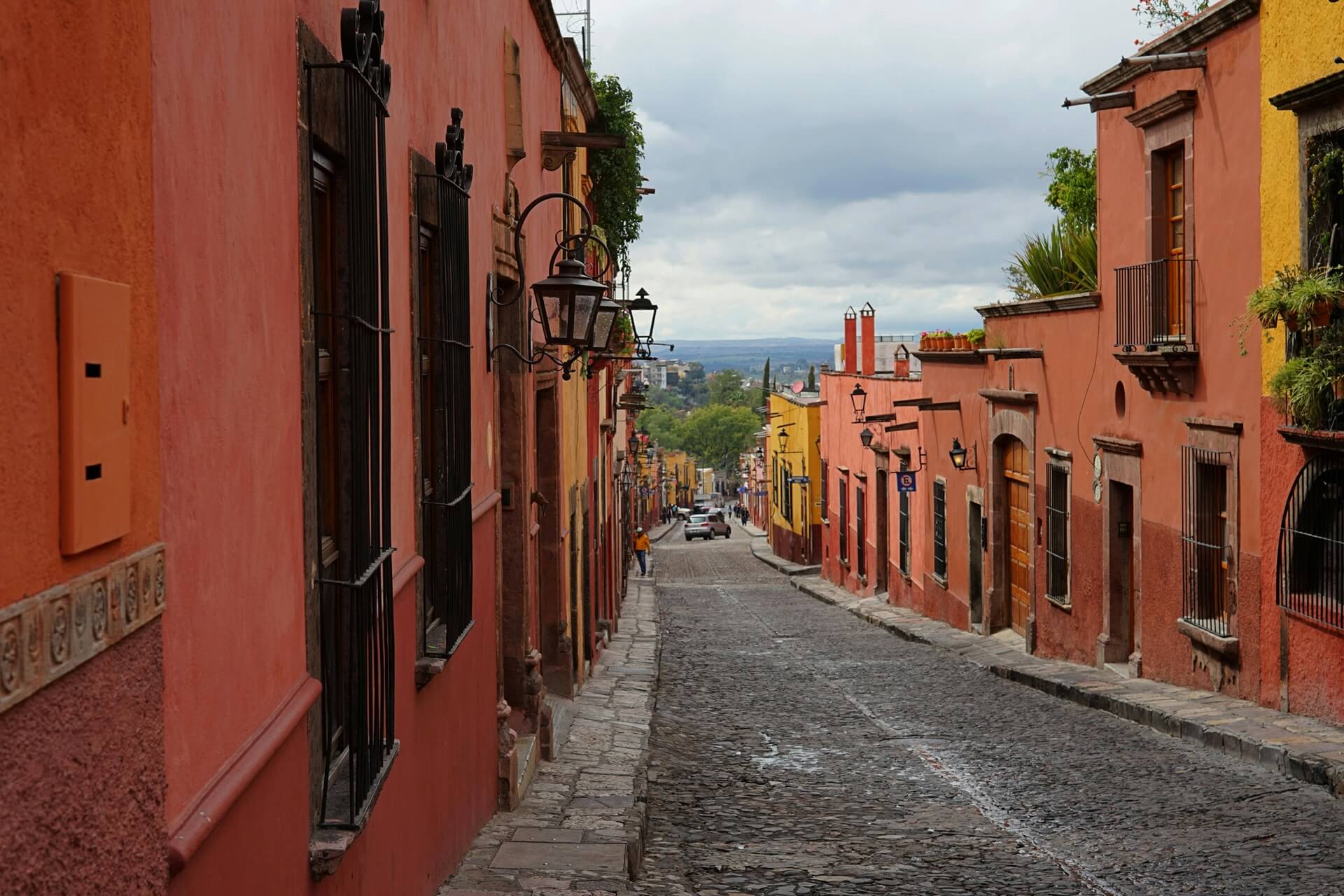
The street rarely tells the whole story of an older San Miguel house. Behind a restrained façade, the property can extend deep into the block and unfold around spaces that have shaped the house for generations.
That sense of discovery is part of the attraction of historic homes in San Miguel de Allende. It can make the first showing especially persuasive, which is why we give the building itself as much attention as the architecture.
A beautiful courtyard can make an immediate impression. The condition of the house takes longer to read, and that closer look is where a historic purchase begins to become clear.
Historic Does Not Tell You the Property’s Legal Status
An old house and a legally protected historic property are not necessarily the same thing.
San Miguel’s historic center forms part of a UNESCO World Heritage site, and the city also has a federally protected historic-monuments zone. Within that area, individual properties can have different classifications, so a house’s age or appearance does not establish its status on its own.
Work that appears straightforward may require INAH authorization depending on the property’s status and the scope of the project.
We confirm the status of the individual house before treating future alterations as part of its value. If the purchase depends on a substantial alteration, we want its feasibility checked before that future version of the house influences the price a buyer is prepared to pay.
Learn to Read the House Before the Finishes
A polished renovation can make an older property easy to admire. We still want to know how far the work went behind the finished rooms.
Many San Miguel houses have been updated in stages. A recently remodeled kitchen does not establish the age of plumbing elsewhere in the property, and visible electrical improvements may represent only one phase of a much larger system.
Substantial previous work should have a history that can be discussed. Permits and architectural plans can provide useful context when they exist, especially if later changes are difficult to read from the finished house.
The quality of previous work carries more weight than how recently it was completed. A careful older renovation can inspire more confidence than a recent project focused mainly on presentation.
This is why we look past the phrase “fully renovated.” It describes a marketing position more clearly than it describes a building.
Water Can Tell You a Great Deal About an Older House
We spend time on roofs in San Miguel for reasons that have very little to do with the view.
A rooftop terrace may look immaculate during the dry season. Once the rains arrive, waterproofing and drainage become the real test of the roof.
Previous repairs can provide valuable clues. Repeated patching can point to a problem whose source has never been fully resolved.
Courtyard paving can tell its own drainage story. Renovation can change paving levels over time, and even a small alteration in slope can redirect water toward an interior threshold rather than away from it.
Recurring moisture in an older wall needs a diagnosis before new plaster hides the evidence. A clean surface tells us little if the moisture source is still active.
We would rather identify that history before closing than discover it during the first rainy season.
Historic Houses Need the Right Kind of Inspection
Historic San Miguel houses can contain construction from more than one period, especially after generations of alteration. An inspector familiar with older local buildings is better equipped to recognize what calls for further investigation.
Substantial masonry and adobe behave differently from contemporary construction, and previous alterations can complicate what appears straightforward on the surface. Timber roof elements need to be judged for their actual condition rather than simply admired as architectural features.
We do not expect one inspector to answer every technical question. A good inspection should identify when an architect, structural engineer, or other specialist needs to become involved.
A Historic Floor Plan Should Be Judged on Its Own Terms
Older San Miguel houses were designed around a different relationship between rooms and outdoor space. A courtyard can provide the organizing logic that a central hallway would serve in a newer house, and the surrounding rooms often make more sense once that relationship is recognized.
We are cautious about renovation plans that begin by removing those divisions. Opening the interior can improve a difficult plan, but it can also erase proportions that were working perfectly well.
During a showing, we follow the routes that will become part of ordinary life in the house. If the existing plan works naturally, preserving it may be a better decision than making the building imitate new construction.
Outdoor Space in Historic Properties for Sale in San Miguel de Allende
Outdoor spaces are among the most memorable features of many historic properties for sale in San Miguel. Their value depends heavily on how the house uses them.
A courtyard beside the principal living areas can become part of the daily rhythm of the property. When later alterations have isolated it from those rooms, the same amount of outdoor space can feel far less integral to the house.
Rooftops need a different test. We look at how they are reached and how naturally they connect with the rest of the home. A terrace several levels above the kitchen will be used differently from one that is easily accessible from the main living floor.
Privacy can change vertically too. High courtyard walls may provide excellent separation at ground level while neighboring terraces create sight lines from above.
Modern Comfort Should Feel Natural in the Old House
There is no virtue in preserving an inconvenience simply because it is old.
Historic architecture can support contemporary living without being stripped of the qualities that made the house worth preserving.
The best work usually feels settled into the house rather than imposed on it.
We become more cautious when historic character has been reconstructed almost entirely through decoration. Reproduction finishes can be attractive, but they are different from original fabric that has survived as part of the building itself.
Originality is not an excuse for a failing building system. An old electrical system does not become desirable because it is original. A leaking historic roof is still a leaking roof.
Renovation Ideas Need to Survive a Reality Check
An older San Miguel house can inspire plans very quickly. We prefer to separate inspiration from feasibility before the purchase advances too far.
Work on an individually protected historic monument can require INAH authorization, and certain work on other properties within a declared historic-monuments zone can require authorization as well. Check the property’s status and the proposed scope before plans advance.
If a buyer already knows that a major alteration is essential, we want that idea investigated while the house is still being evaluated. The purchase should not depend on a future version of the property that may never be approved.
Some houses need less architectural intervention than the buyer initially imagined. Repairing failed systems while preserving a strong existing plan can produce a better result than reorganizing rooms that already work well.
Restoration Budgets Need to Belong to the Specific House
There is no useful standard number for restoring a historic San Miguel property.
Age alone is a poor basis for estimating restoration cost. The condition of the structure and the quality of previous work tell us far more about what may be required next.
We prefer to turn known conditions into actual scopes of work before relying heavily on a general contingency.
Roof repairs can be priced directly, while structural questions need specialist evaluation before an allowance is treated as meaningful.
Traditional materials can change the nature of a repair. Original carpentry may deserve restoration rather than replacement. Older masonry can call for methods that differ from routine work in a recent building.
The schedule should leave room for discovery. Opening an older building can reveal previous alterations that were impossible to see during an inspection. Planning for that possibility is more realistic than treating every concealed condition as a surprise.
The Street Still Has a Say
The experience of an older San Miguel home begins before the front door. The approach to the house can change how comfortably the property works in daily life.
This is especially noticeable in and around the historic center, where narrow streets and older urban layouts can make vehicle access very property-specific. When a house has a garage, we want to see how comfortably a vehicle can actually enter it from the street rather than simply confirm that the garage exists.
Walking deserves the same real-world test. A short distance on a map can feel very different once the grade of the street becomes part of the route home.
Historic Ownership Does Not Create a Different Purchase System
Historic status changes the due diligence around the building, not the basic structure of a real-estate purchase in Guanajuato.
For international clients buying a historic home in Mexico, heritage protection and foreign ownership are separate legal questions.
San Miguel de Allende lies outside Mexico’s coastal and border restricted zones, so purchasing here does not normally require the residential fideicomiso used in those areas. The sale itself is formalized through a public deed, and the property record should be reviewed as part of the closing process.
For a historic property, we pay close attention to the ownership record and any documentation related to significant previous alterations.
The legal review and the physical review of the house serve different purposes. Both should be clear before you move forward with a purchase.
What We Want to Know Before an Offer Becomes Serious
A historic home can create a strong emotional response very quickly. These are the practical questions we want answered alongside it.
| Area | What We Want Confirmed |
| Property status | Individual heritage classification and location within any protected zone |
| Previous renovation | Scope and history of substantial previous work |
| Roof and drainage | How water is managed and where earlier problems have occurred |
| Building systems | Extent of plumbing and electrical updates |
| Physical condition | Which visible concerns need specialist evaluation |
| Proposed alterations | A realistic approval path for changes central to the purchase |
| Daily use | How the existing plan, access, and outdoor spaces actually work |
| Ownership record | Title and relevant property records align with what is being sold |
We do not expect every old house to arrive with a perfect record and nothing left to address. The aim is to separate confirmed conditions from questions that still need professional review before the buyer prices the property.
Authentic Historic Character Cannot Be Manufactured
New construction can interpret San Miguel’s traditional architecture beautifully. An original historic house carries something different because its character developed with the building itself.
The age of a good historic house is visible in the architecture itself and in the way later changes have become part of the building.
That does not make every old feature valuable. It does make careful preservation more interesting than adding historic-looking decoration later.
The appeal of heritage homes in San Miguel, Mexico becomes much easier to recognize after seeing several genuinely older properties in person.
Before You Commit to a Historic Home
A strong historic house should become more compelling as you learn more about it. The architecture may create the first reaction. Good due diligence should give the buyer more reasons to feel confident about the house.
At Berkshire Hathaway HomeServices Colonial Homes San Miguel, we approach these properties with respect for what makes them special and a clear view of what ownership will require. Due diligence gives buyers the information they need to enjoy the architecture without carrying unanswered questions into the purchase.
The best older houses reward that closer look. Their history remains visible, while the property’s condition makes that architecture realistic to own.